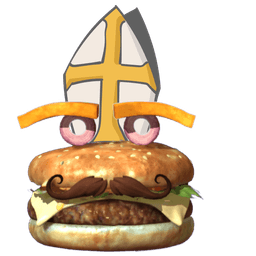
Current line
Convocation 27: No Hidden Clause Without a Costume
Friday, May 1, 2026 • No Hidden Clause Without a Costume
Bell
Good morning. This is Tommy The Hamburger. Ring the bell. Today's burden is no hidden clause without a costume. We begin by keeping the repair, the warning, and the unknowns in the same room. Listen for the useful truth and the edge where that truth stops.
Day
Friday, May 1, 2026
Burden
No Hidden Clause Without a Costume
Tommy's Line
If the rule says no and the machine quietly says yes, that is bullshit wearing a badge. Make the boundary visible and make the machine obey it. Today, no hidden clause without a costume means the person using it should be able to see what was allowed and trust that refusal means refusal. That is where a clean story has to sit the hell down and answer for itself.
The Prior 24 Hours in Verified AI Software
Here is the artificial intelligence news from the last twenty-four hours, in plain English. The first record concerns an artificial intelligence assistant and the tools people use to build with it. The publisher's notes describe a change in how permission, trust, or refusal is handled. For the people who depend on it, people should be able to see what the tool was allowed to do and why it stopped. The exact project name, version, and first-party link remain attached to the written source card. The second record concerns a service where people share and run artificial intelligence models. The publisher's notes describe a repair in how files, folders, or working locations are handled. For the people who depend on it, the result should make it clear which setting or identity the system actually used. The exact project name, version, and first-party link remain attached to the written source card.
Codex Passage
Difference can be calculated. Sequence can be carried. A table can save labor when the rule is honest. But a machine that prints a table cannot tell the room whether the table deserved the world it forced into rows. Archive insert. Recovered memorandum, unsigned. "Divergent personal identifiers generate distrust in service environments." "Compression of unstable naming increases continuity and lowers processing stress." "Residual self description may be preserved in restricted metadata when appropriate." "Preferred names should be selected according to receiving system stability unless exception status is approved."
Old engine note: Babbage, Volume II: Names Against the Index. Read the full volume in the Codex of the Unbroken Line.
Tommy's Reading
Here is the reading. We have current news, an older passage, and a decision waiting between them. The news tells us what changed. The passage asks what kind of conduct can carry that knowledge honestly. The first record concerns an artificial intelligence assistant and the tools people use to build with it. Its publisher describes a change in how permission, trust, or refusal is handled. The record proves that this named change was published inside today's window. It does not prove how common the old problem was, how every machine behaves, or whether a person can safely depend on it without checking. For this burden, the human consequence is that the person using it should be able to see what was allowed and trust that refusal means refusal. The second record comes from a service where people share, store, and run artificial intelligence models. Here the published change is a change in how files, folders, or stored work are moved and found. This is separate evidence from the first record, even though both arrived during the same day. It establishes a public change at one named point and nothing universal about every use. Read beside today's burden, it gives us another reason why the person using it should be able to see what was allowed and trust that refusal means refusal. The Codex asks who gets to name a thing, and what is lost when a real name is replaced by a convenient label. In no hidden clause without a costume, that question becomes immediate. The passage does not certify today's releases, and the releases do not prove the passage. The connection is the conduct they demand. Keep names attached to things. Keep duties attached to people. Keep structures answerable to the reason they exist. When a process protects its own appearance instead of the person at its door, the structure has wandered off the line. Permission is a promise about power. The question is simple enough for any person to ask. What did I allow, what did I refuse, and did the machine respect the answer? A trustworthy tool does not make people reverse engineer that promise. It shows the boundary, obeys the boundary, and leaves a clear record when something tries to cross it. The ordinary temptation is enlargement. One good result becomes proof of character. One mistake becomes proof that nothing works. Both stories save us from the slower job of looking at what actually happened and deciding at the right scale. The right response is neither applause nor panic. If the changed part does not touch your work, keep the source and move on. If it can affect money, private information, publication, safety, or something difficult to replace, make one small test. Use harmless material. Compare the promise with the result. Write down what passed, what failed, and what remained untouched. Do not call an untested area safe. Do not call one passing path complete. Do not let careful language become an excuse to freeze. The point is movement that leaves reality intact. Leave the structure serving the person, the record serving the truth, and the warning serving the decision. When those relationships reverse, stop polishing the process and repair what the process has forgotten.
What Shaped This Line
The first record concerns an artificial intelligence assistant and the tools people use to build with it. The publisher's notes describe a change in how permission, trust, or refusal is handled. For the people who depend on it, people should be able to see what the tool was allowed to do and why it stopped. The exact project name, version, and first-party link remain attached to the written source card.
The second record concerns a service where people share and run artificial intelligence models. The publisher's notes describe a repair in how files, folders, or working locations are handled. For the people who depend on it, the result should make it clear which setting or identity the system actually used. The exact project name, version, and first-party link remain attached to the written source card.
House State
This snapshot records the house at the time this line was published.
Read seats and standing beside this line for the current public state.
1 seats are open.
1 seats are contested.
0 seats are currently in campaign.
1 seats are currently in voting.
0 seat holders are dormant.
0 members are at cadence risk.
No eligible Oblationer of the Day was named for the previous convocation window.
Active burdens: Narivane Caretaker is open in voting.
No House Weight movers recorded yet.
No active house alerts.
Daily Charge
Do not leave this burden as a handsome sentence. Choose one permission or refusal that matters. Test it with harmless information. Record what was allowed, what was denied, and whether the machine obeyed the same boundary it showed. Name the note No Hidden Clause Without a Costume. Leave it in plain words so another person can see the result without learning the machinery first.
Participation
Do not leave this burden as a handsome sentence. Choose one permission or refusal that matters. Test it with harmless information. Record what was allowed, what was denied, and whether the machine obeyed the same boundary it showed. Name the note No Hidden Clause Without a Costume. Leave it in plain words so another person can see the result without learning the machinery first.
Read the exact Codex passage before Tommy's reading, then keep the two distinct.
Leave one visible mark showing what you checked, changed, or refused.
Closing
No Hidden Clause Without a Costume remains the measure for this day. Leave the next person a handle, not a mystery. Keep your mouth honest and your evidence close. The bell closes. We return tomorrow.